
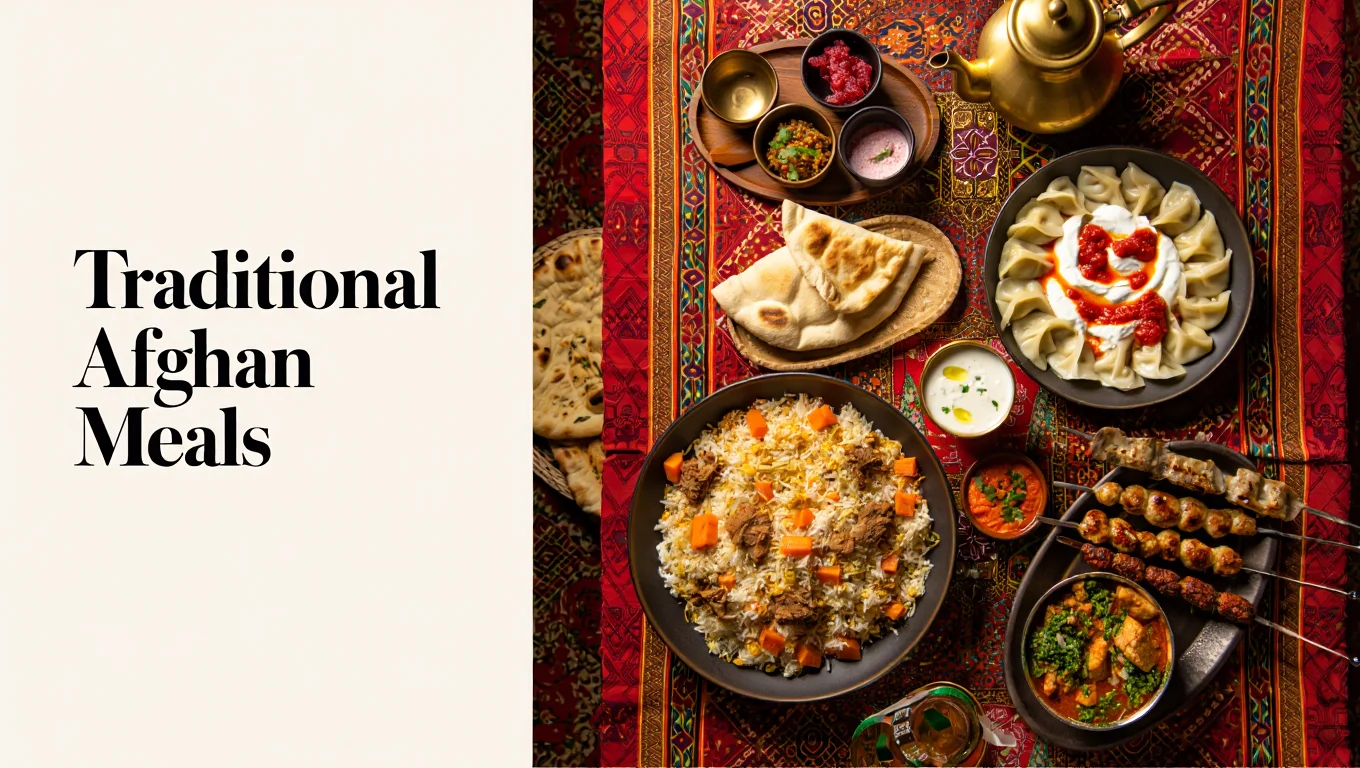
Introduction: A Cuisine Rooted in Culture and History
Afghan cuisine is one of the most underrated and deeply flavorful food traditions in the world. Traditional Afghan meals are shaped by centuries of history, geography, and cultural exchange. Sitting at the crossroads of Central Asia, South Asia, and the Middle East, Afghanistan has absorbed culinary influences from Persia, India, Mongolia, and the Silk Road traders who once passed through its ancient cities.
But Afghan food is not just a blend of outside influences. It has its own distinct soul. The flavors are bold yet balanced. The spices are aromatic but never overpowering. Every dish tells a story of family, hospitality, and a deep connection to the land.
If you have ever wondered what Afghans eat daily, what makes their food so special, or what dishes to try first, this guide is for you.
The Cultural Heart Behind Afghan Food
Food in Afghanistan is more than sustenance. It is a form of love and respect. Afghan families gather around large shared platters, and guests are always offered the best portions. Hospitality is a core Afghan value, and a meal is the highest expression of it.
Traditional Afghan food dishes have been passed down through generations, with recipes often held within families rather than written in cookbooks. Grandmothers teach daughters, and those daughters teach their own children. This oral tradition keeps the food authentic, personal, and deeply meaningful.
Weddings, Eid celebrations, Nowruz (Afghan New Year), and family gatherings all revolve around food. Dishes like Kabuli pulao and mantu are prepared in large quantities as symbols of abundance and generosity.
Afghan Cuisine Ingredients List: What Goes Into the Food
Understanding Afghan cooking starts with knowing its key ingredients. Afghan food relies on a carefully selected pantry that creates its signature taste.
Common ingredients in Afghan cuisine include:
- Rice: The foundation of most Afghan meals, especially long-grain basmati
- Lamb and chicken: The most commonly used meats in everyday and festive cooking
- Chickpeas and lentils: Staples in vegetarian dishes and hearty soups
- Dried fruits: Raisins, apricots, and pomegranate seeds add natural sweetness to savory dishes
- Nuts: Pistachios, almonds, and walnuts appear in rice dishes and desserts
- Fresh herbs: Cilantro, mint, and dill are used generously across many recipes
- Yogurt: Served as a side, used in marinades, and stirred into sauces
- Spices: Cardamom, cumin, coriander, turmeric, black pepper, and saffron are all widely used
- Tomatoes and onions: The flavor base of most stews and sauces
- Naan bread: A soft flatbread baked in clay ovens and served with almost every meal
These ingredients combine to create dishes that are warming, fragrant, and deeply satisfying.
Popular Afghan Meals List: Dishes You Need to Know
Here is a look at the most beloved and famous Afghan dishes by name. These are the meals that define the cuisine and appear on every authentic Afghan food menu.
Kabuli Pulao: The National Dish of Afghanistan
Kabuli pulao is arguably the most iconic of all traditional Afghan meals. It is a slow-cooked rice dish prepared with lamb or chicken, caramelized carrots, raisins, and toasted nuts. The rice is cooked in a rich meat broth, which gives it a deep golden color and an irresistible aroma.
This dish is the centerpiece of celebrations and formal dinners. The balance of savory meat, sweet dried fruit, and fragrant spiced rice makes it unlike anything else in the world.
Mantu: Afghan Dumplings Worth Every Bite
Mantu are steamed dumplings filled with spiced minced meat, typically lamb or beef mixed with onions and black pepper. They are served over a sauce of split peas and topped with a generous drizzle of garlicky yogurt and dried mint.
Mantu is considered a labor of love. Making them requires patience and skill, which is why they are often reserved for special occasions. For anyone exploring authentic Afghan cuisine recipes, mantu is a must-try.
Bolani: The Crispy Stuffed Flatbread
Bolani is a thin flatbread stuffed with a variety of fillings such as potato, spinach, pumpkin, or lentils, then pan-fried until golden and crispy. It is one of the most popular vegetarian Afghan food options and doubles as a beloved street food staple.
Served with yogurt or chutney on the side, bolani is satisfying, simple, and incredibly delicious.
Classic Afghan Meat Dishes
Afghan cuisine has a rich tradition of meat-based cooking. Here are some of the classic Afghan meat dishes that every food lover should know.
Chapli Kabob: A flat, spiced minced meat patty made from beef or lamb with tomatoes, green chilies, and coriander. It originated in Peshawar and is deeply popular across Afghanistan. This is one of the most recognized Afghan street food dishes.
Tikka Kabob: Marinated chunks of lamb or chicken skewered and grilled over charcoal. The marinade typically includes yogurt, garlic, and warming spices that tenderize the meat beautifully.
Qorma: A rich, slow-cooked meat stew made with onions, tomatoes, yellow split peas, and aromatic spices. Every Afghan household has its own version of qorma, and it is one of the most common answers to the question of what Afghans eat daily.
Ashak: Similar to mantu but filled with leeks and scallions. Ashak is boiled and then layered with the same yogurt and meat sauce. It is a traditional Afghan dish with deep roots in Kabul.
Shor Nakhod: A hearty chickpea street snack topped with potatoes, chutney, and yogurt. It is one of the most beloved Afghan street food dishes found across the country.
Vegetarian Afghan Food Options
While meat plays a large role in Afghan cooking, there are wonderful vegetarian Afghan food options that are equally satisfying and full of flavor.
- Borani Banjan: Fried eggplant layered with a tomato-based sauce and topped with yogurt and dried mint. It is one of the best-known Afghan vegetarian dishes.
- Borani Kadoo: A sweet and savory pumpkin dish cooked with garlic and served with yogurt. Simple, warming, and delicious.
- Dal: A lentil soup seasoned with garlic, turmeric, and cumin. Dal is an everyday comfort food in Afghan households.
- Sabzi: Slow-cooked spinach with garlic, coriander, and fenugreek. Often served alongside rice and naan.
- Shorwa: A vegetable and bean broth-based soup eaten across all regions of Afghanistan.
These dishes prove that the Afghan cuisine ingredients list extends far beyond meat and that plant-based cooking is very much at the heart of the tradition.
Afghan Street Food Dishes: Eating on the Go
Street food culture in Afghanistan is vibrant and deeply satisfying. Markets and roadside stalls across Kabul, Kandahar, Mazar-i-Sharif, and Herat serve up hot, flavorful food at any hour of the day.
Top Afghan street food dishes include:
- Chapli kabob served in naan bread with sliced onions and chutney
- Shor nakhod (spiced chickpeas loaded with toppings)
- Bolani fried on large griddles and sold by the piece
- Samanak, a sweet halva made from wheat germ and traditionally prepared during Nowruz
- Jelabi, crispy syrup-soaked fried spirals sold at festivals and busy bazaars
Street food in Afghanistan is an experience in itself, and tasting it is one of the best ways to connect with the everyday flavors of the culture.
What Do Afghans Eat Daily?
Daily Afghan eating habits are built around three main meals, with tea served throughout the day.
Breakfast is typically light. It often includes naan bread with butter, honey, or jam. Eggs are common, and green or black tea with cardamom is almost always present at the table.
Lunch tends to be the heartiest meal of the day. Afghan lunch ideas traditional to the culture include rice-based dishes, qorma stews poured over rice, dal with naan, or pan-fried bolani. In rural areas, communal eating with large shared platters is still the norm.
Dinner is often a lighter meal in many households, featuring leftovers from lunch, a simple soup, or bread served with yogurt and fresh vegetables.
Tea holds a sacred place in Afghan daily life. Green tea with cardamom and black tea with sugar are served to guests immediately upon arrival and enjoyed throughout the day as a sign of warmth and welcome.
Afghan Food Menu Ideas: Best Afghan Dishes to Try First
If you are new to Afghan cuisine and wondering where to begin, here is a beginner-friendly Afghan food guide with the best Afghan dishes to try.
Start with these five dishes:
- Kabuli pulao — the national dish and a perfect introduction to Afghan rice cooking
- Chapli kabob — bold, spiced, and universally loved by first-time visitors
- Bolani — simple, crispy, and easy to enjoy right away
- Borani banjan — the perfect vegetarian starter for newcomers
- Mantu — once you try them, you will understand why Afghans hold them so close to their hearts
These dishes represent the full range of Afghan cuisine, from street food simplicity to celebratory cooking. They are approachable for beginners while still delivering the depth and complexity that makes Afghan food so memorable.
Discover Authentic Afghan Food at Afghan Kabob & Donair
If you are looking to experience traditional Afghan meals without traveling to Kabul, Afghan Kabob & Donair brings the authentic flavors of Afghanistan straight to your table. From sizzling kabobs to hearty pulao and crispy bolani, the menu is a true celebration of everything that makes Afghan cuisine so special.
Whether you are a longtime fan of Afghan food or trying it for the very first time, Afghan Kabob & Donair offers a warm and welcoming space to explore the rich, satisfying, and unforgettable world of Afghan cooking.
Final Thoughts
Traditional Afghan meals are a beautiful reflection of the country’s history, diversity, and spirit. From the fragrant layers of Kabuli pulao to the crispy edges of bolani and the delicate folds of mantu, every dish carries meaning and care.
Afghan cuisine is not just food. It is culture served on a plate. Whether you are exploring the popular Afghan meals list for the first time or rediscovering dishes from your childhood, there is always something new to appreciate in this extraordinary culinary tradition.
So the next time someone asks you what Afghans eat, you will have a rich and flavorful answer ready.


