Introduction: A Journey Into the Heart of Afghan Food
If you have ever sat down to a meal that felt like a warm embrace, you already understand the soul of Afghan cooking. This guide to Afghan cuisine takes you through centuries of flavor, culture, and tradition that have shaped one of the world’s most underrated yet deeply rich food cultures.
Afghan cuisine sits at a beautiful crossroads of Central Asia, South Asia, and the Middle East. Every dish tells a story. Every spice carries a memory. And every meal is an invitation to connect with something ancient and meaningful. At Afghan Kabob & Donair, we believe food is more than nourishment. It is a bridge between people, cultures, and generations.
Whether you are discovering Afghan food for the first time or looking to deepen your appreciation, this guide covers everything you need to know about traditional Afghan food, its roots, its rituals, and its most beloved dishes.
The History and Roots of Afghan Cuisine
To understand what traditional Afghan food is, you first need to understand where Afghanistan sits in the world. Positioned along the ancient Silk Road, Afghanistan was a crossroads of trade routes connecting China, Persia, India, and the Mediterranean. Merchants, travelers, and conquerors all passed through, and each left something behind in the kitchen.
Persian culinary techniques brought fragrant rice dishes and slow-cooked stews. Indian spice trade routes introduced cardamom, turmeric, and coriander. Central Asian nomadic tribes contributed hearty meat preparations and dairy-based dishes. The result is a cuisine that is layered, nuanced, and deeply satisfying.
Afghan cooking has always been shaped by the landscape too. The rugged mountains, fertile river valleys, and dry plains of Afghanistan produce a specific bounty: pomegranates, apricots, grapes, wheat, and an abundance of lamb and chicken. These ingredients form the backbone of traditional Afghan food culture, and they appear again and again across the country’s most iconic dishes.
Afghan Food Culture and Dining Traditions
In Afghanistan, food is never just about eating. It is about community, respect, and generosity. Afghan food culture and dining traditions are deeply rooted in the concept of hospitality, known as “melmastia.” This centuries-old tradition means that a guest must always be welcomed, fed generously, and treated with honor.
When you sit down for a meal in an Afghan home, expect abundance. Dishes are spread across a large cloth placed on the floor called a “dastarkhan.” Family and guests sit together, often on cushions, sharing food from communal platters. The eldest members of the family are typically served first, reflecting the deep respect for elders in Afghan culture.
Tea, or “chai,” is central to Afghan hospitality. Green tea is served throughout the day, especially before and after meals. It is never just a drink. It is a gesture of welcome.
Meals are also tied to religious observance. Afghan cuisine follows Islamic dietary guidelines, meaning pork is absent and meat is prepared according to halal standards. During Ramadan, the evening meal of Iftar is a particularly meaningful and celebratory occasion, featuring rich dishes and sweet treats shared with family and community.
Key Ingredients in Afghan Cooking
Understanding the ingredients used in authentic Afghan cuisine dishes gives you a window into its unique flavor profile. Afghan cooking relies on a core set of spices and ingredients that create its signature warmth and depth.
Common spices and flavoring agents include:
- Cardamom, both green and black
- Cumin and coriander seeds
- Turmeric and saffron
- Dried coriander leaves and mint
- Cinnamon, cloves, and black pepper
Staple ingredients include:
- Basmati rice, used in pilaf-style dishes
- Lamb and chicken as primary proteins
- Lentils, chickpeas, and split peas
- Dried fruits such as raisins, apricots, and barberries
- Yogurt is used both in cooking and as a condiment
- Naan and other flatbreads
The balance of savory and slightly sweet is a hallmark of Afghan cuisine. A dish like Kabuli Palaw features caramelized carrots and raisins alongside tender lamb and aromatic rice, creating a complex flavor combination that is distinctly Afghan.
Cooking Styles and Influences
Afghan cooking methods are often slow and intentional. Long braising, gentle simmering, and open-flame grilling are the foundations of most traditional preparations. This patience in cooking results in dishes where flavors fully develop and proteins become fall-apart tender.
The tandoor oven, a clay vessel heated by wood or charcoal, plays a central role in Afghan cooking. Breads like naan and bolani are slapped against the inner walls of the tandoor, baking in minutes with a characteristic char and chew. Kebabs are grilled over open flame, their smoky aroma one of the most recognizable signatures of Afghan street food.
Persian and Mughal influences are visible in the rice dishes, where technique matters enormously. The process of steaming rice to achieve individual, non-sticky grains is a point of great culinary pride. A well-made Afghan pulao is a dish of texture, aroma, and precision.
Popular Afghan Dishes You Need to Know
Kabuli Palaw: The National Dish
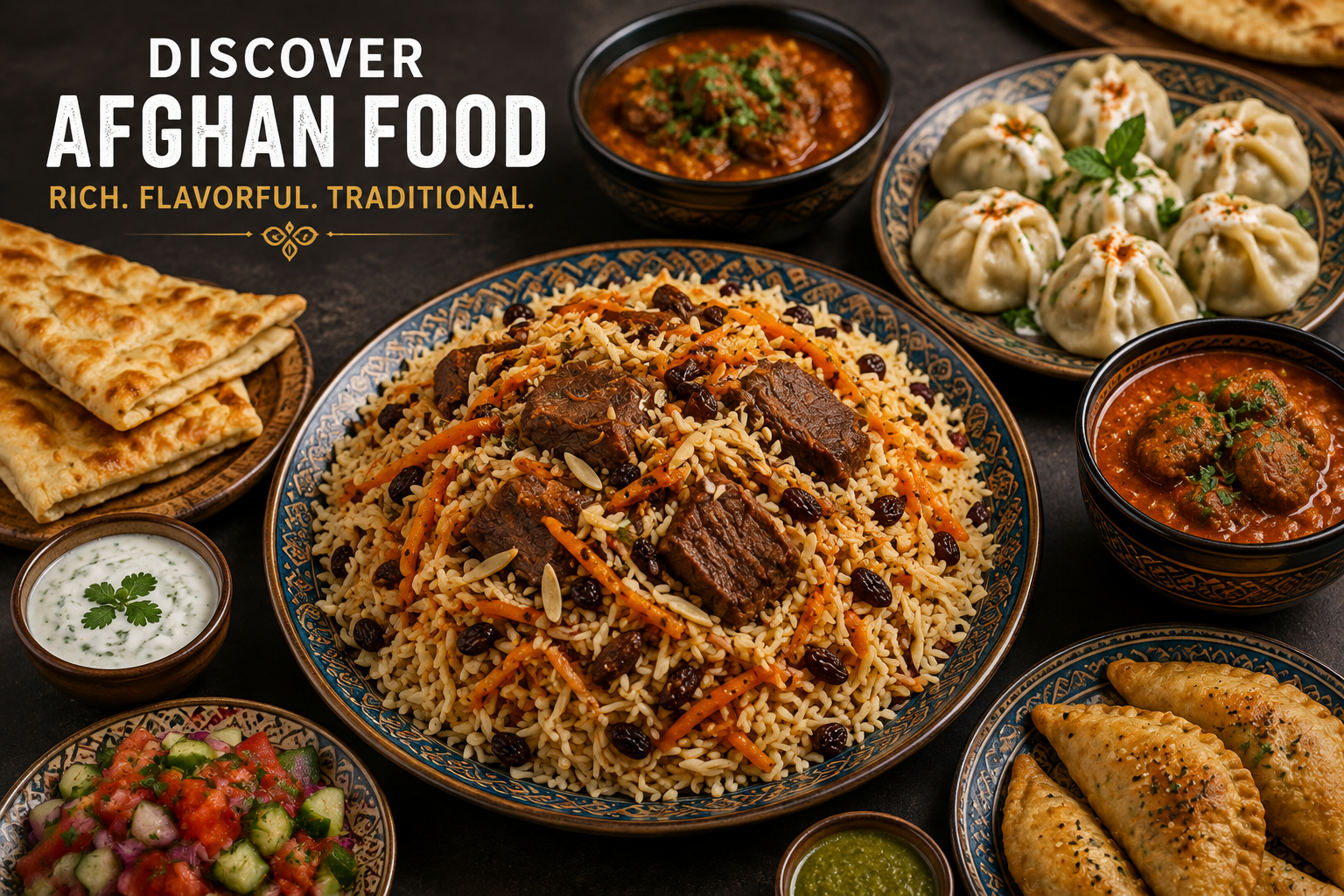
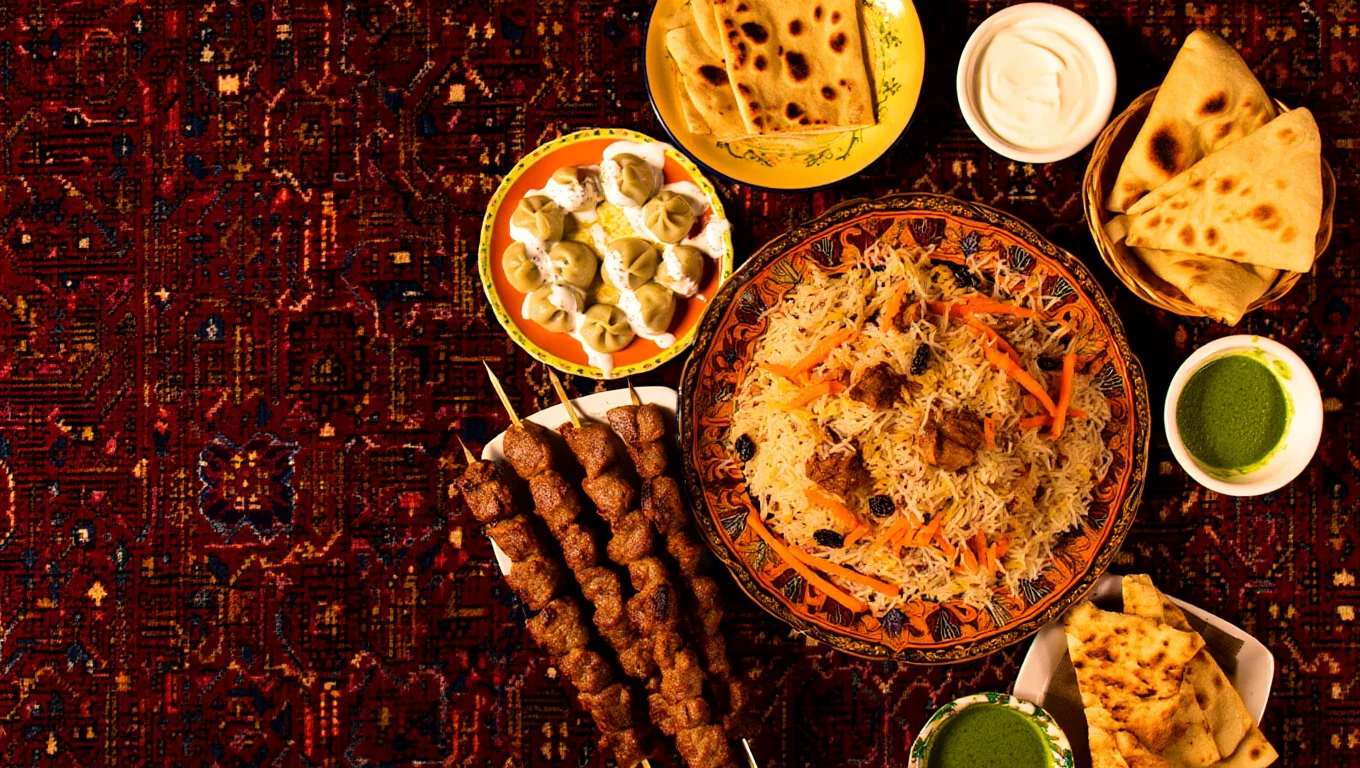
No guide to Afghan cuisine is complete without discussing Kabuli Palaw. This is the crown jewel of Afghan cooking and the country’s unofficial national dish. Long-grain basmati rice is cooked in a rich meat broth, then layered with slow-cooked lamb, caramelized shredded carrots, plump raisins, and slivered almonds or pistachios.
The dish is served at weddings, celebrations, and whenever a guest of honor arrives. It is a dish that communicates love and effort. Every family has its own recipe, passed down through generations.
Kebabs: The Soul of Afghan Street Food
When people think of authentic Afghan cuisine dishes, kebabs often come to mind first. Afghan kebabs are grilled over charcoal, seasoned with simple but effective spices like cumin, coriander, and black pepper. The most common varieties include:
- Chapli Kebab: A flat, spiced ground meat patty originating from Jalalabad
- Seekh Kebab: Minced meat pressed onto skewers and grilled. For a deeper look at Afghan grilling tradition, read our guide to Afghan Beef BBQ and the techniques that make it special.
- Tikka Kebab: Cubes of marinated lamb or chicken grilled to juicy perfection. Our Afghani Chicken Kabob is one of our most popular dishes for good reason.
- Shami Kebab: A softer, lentil-mixed patty that pairs beautifully with flatbread
At Afghan Kabob & Donair, our kebabs follow traditional recipes that honor these time-tested techniques. Browse our full menu to see all the authentic dishes we serve.
Mantu: Afghan Dumplings
Mantu are steamed dumplings filled with spiced ground beef or lamb and onion, served with a tangy tomato sauce and a generous drizzle of garlicky yogurt. They are delicate, rich, and deeply satisfying. Making mantu is a labor of love, often a family project where everyone gathers to fold the dumplings together.
Shorwa: The Comfort Stew
Shorwa is a hearty, slow-simmered broth-based stew that varies by region and season. It commonly features lamb, chickpeas, tomatoes, and root vegetables, seasoned with warming spices. It is the Afghan answer to comfort food, perfect served with fresh naan for dipping.
Aushak: Leek Dumplings
Similar to mantu in presentation but different in filling, aushak features dumplings stuffed with scallions and leeks. They are boiled rather than steamed and served with the same yogurt and tomato sauce combination. Aushak is a staple of Afghan home cooking.
Best Afghan Dishes to Try for Beginners
If you are new to Afghan food, here are the best Afghan dishes to try first:
- Kabuli Palaw for an introduction to Afghan rice culture
- Chapli Kebab with naan for a taste of street-food tradition
- Bolani (stuffed flatbread) as a simple, approachable snack
- Mantu for an elegant, flavor-packed experience
- Shorwa if you want something warming and familiar
These dishes offer a great cross-section of textures, flavors, and cooking techniques that define Afghan food without overwhelming first-time diners.
Afghan Vegetarian Dishes: Traditional and Delicious
Afghan vegetarian dishes traditional to the cuisine are plentiful, flavorful, and often overlooked. While Afghan cooking is known for its meat dishes, vegetarian options are just as important to the everyday table.
- Borani Banjan: Fried eggplant layered with tomato sauce and topped with yogurt and dried mint
- Borani Kadoo: Sweet pan-fried pumpkin served with spiced yogurt
- Dal: Slow-cooked lentils seasoned with turmeric, cumin, and garlic
- Bolani: Flatbread stuffed with potato and leek or spinach, pan-fried until crispy
- Sabzi: A slow-cooked spinach dish with onion, garlic, and spices
These dishes reflect how Afghan cooks have always celebrated vegetables and legumes as centerpieces, not afterthoughts.
How Afghan Cuisine Reflects Hospitality and Cultural Values
Perhaps more than any other aspect, Afghan cuisine is a direct expression of cultural identity and human generosity. The act of cooking for someone is an act of respect. The size of a meal reflects the importance of the guest. Refusing food is considered impolite, while accepting it graciously is a form of gratitude.
Food in Afghan culture is also deeply tied to memory and belonging. For Afghan families living abroad, preparing traditional dishes is a way of maintaining connection to home, to ancestry, and to identity. A pot of Kabuli Palaw simmering on a stove in a new country carries the weight of an entire heritage.
At Afghan Kabob & Donair, we are proud to carry that heritage forward, serving dishes that honor the traditions, techniques, and flavors that have defined Afghan cooking for centuries.
Conclusion: Taste the Story
This guide to Afghan cuisine only scratches the surface of a food culture that is extraordinarily rich and deeply human. From the smoky char of a freshly grilled kebab to the saffron-scented steam rising from a pot of Kabuli Palaw, every element of Afghan cooking invites you to slow down, gather together, and savor the moment.
Afghan food is not just about flavor. It is about belonging. It is a tradition passed from grandmothers to grandchildren, shared across dastarkhan cloths and communal platters, offered to strangers and friends with equal warmth.
We invite you to explore that tradition at Afghan Kabob & Donair. Come hungry. Leave feeling like family.