
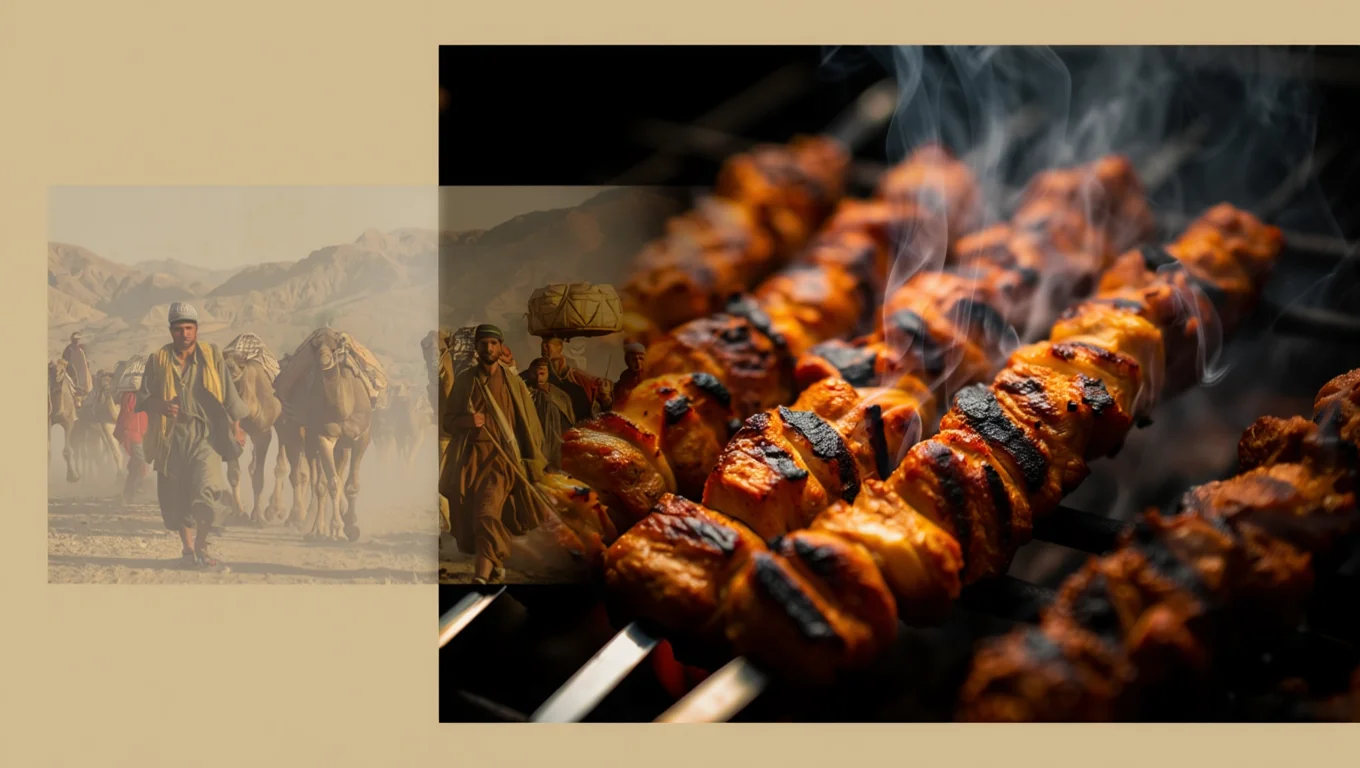
Introduction: A Dish That Has Stood the Test of Time
Some foods just have a way of bringing people together. Afghan kabob is one of them.
Whether you’re walking through the busy streets of Kabul, visiting a restaurant in Toronto, or exploring a food market in London, chances are you’ve come across the irresistible smell of Afghan kabob sizzling over hot charcoal. It’s hard to resist.
But what makes this dish so special? And where did it all begin?
In this article, we’re going to take a deep dive into the history of Afghan kabob, explore its roots in Central Asian food culture, and explain why it has become one of the most beloved grilled meat traditions in the world.
What Is Afghan Kabob?
Before we get into the history, let’s start with the basics.
Afghan kabob is a traditional Afghan dish made from seasoned meat, typically lamb, beef, or chicken, that is shaped onto skewers and grilled over an open flame or hot charcoal. The result is a smoky, juicy, and flavorful piece of meat that is simple yet deeply satisfying.
Unlike many grilled dishes that rely on heavy marinades or sauces, Afghan kabob lets the natural flavor of the meat do the talking. It’s usually seasoned with onion, salt, black pepper, and a handful of spices. That’s it.
The simplicity is the secret.
It’s often served with freshwater naan (Afghan flatbread), fresh tomatoes, green chilies, and a side of rice. Simple ingredients, bold flavors.
If you’d like to try authentic Afghan kabob for yourself, explore our full menu and see everything we offer.
The History of Afghan Kabob: Going Back Centuries
So what is the history of Afghan kabob, really?
To understand it, you need to go back hundreds, possibly thousands of years, to the heart of Central Asia.
The history of Afghan kabob is deeply connected to the nomadic tribes and warrior cultures that roamed the vast lands of Central and South Asia long before modern borders existed. These nomadic groups traveled across mountains, valleys, and deserts with herds of sheep and goats. They needed food that was fast to prepare, easy to cook, and filling enough to fuel long journeys.
Grilling meat over an open fire was the perfect solution.
Historians and food researchers believe that the practice of skewering and grilling meat over fire originated thousands of years ago, with some tracing it back to ancient Persia and the surrounding regions. As trade routes opened up and armies moved across lands, this style of cooking spread with them.
Afghanistan, sitting at the crossroads of civilizations, was right in the middle of all of this.
The Silk Road passed through Afghan territory, bringing merchants, travelers, and food traditions from China, Persia, India, and the Middle East. Over time, these influences blended with local Afghan cooking customs to create what we now know as Afghan kabob.
It wasn’t just food. It was a symbol of hospitality, strength, and culture.
Origin of Afghan Kabob: Where Did It Come From?
The origin of Afghan kabob is not a simple straight line. It’s a story of cultures mixing, traditions evolving, and flavors blending across centuries.
Most food historians agree that the concept of grilled skewered meat has its roots in ancient Persia, which covered a large portion of what is now Iran, Afghanistan, and Central Asia. The Persian word “kabab” is believed to be one of the earliest recorded uses of the term, meaning roasted or grilled meat.
From Persia, this cooking style spread eastward into Afghanistan and westward into the Ottoman Empire and the broader Middle East. Each region adapted the dish to fit its own ingredients, spices, and culture.
In Afghanistan, the dish took on its own identity. Afghan cooks developed their own spice blends, preferred cuts of meat (often lamb), and cooking techniques that set their kabob apart from neighboring regions.
The unique geography of Afghanistan also played a role. High-altitude pastures produced some of the finest lamb in the region. Afghan shepherds and farmers worked closely with the land, which gave them access to fresh, high-quality meat that made their kabobs naturally flavorful.
So while Afghan kabob shares some DNA with Persian and Middle Eastern kebabs, it evolved into something uniquely its own.
Afghan Kabob vs Middle Eastern Kebab: What’s the Difference?
This is a question many food lovers ask, and it’s a fair one.
At first glance, Afghan kabob and Middle Eastern kebab might look similar. Both involve grilled meat on skewers. But once you take a bite, the differences become clear.
Spices and Seasonings
Middle Eastern kebabs, particularly from countries like Turkey, Lebanon, or Iran, often use a rich blend of spices including cumin, coriander, sumac, paprika, and sometimes pomegranate molasses. The flavor profiles are bold and complex.
Afghan kabob, on the other hand, is known for being more minimalist. The seasoning is simpler, letting the quality of the meat and the smokiness of the charcoal take center stage. Onion, salt, and pepper are the core seasonings, with some variations adding a touch of turmeric or dried coriander.
Meat and Texture
Afghan kabob traditionally uses fatty cuts of lamb or beef. The fat is actually a key ingredient because it bastes the meat as it grills, keeping it juicy and adding flavor. Some Afghan kabobs are made with a higher fat-to-meat ratio specifically for this reason.
Middle Eastern kebabs vary widely. Some use leaner cuts, others are made with ground meat mixed with fresh herbs like parsley or mint.
Cooking Style
Afghan kabobs are almost always cooked over natural charcoal at high heat. The charcoal smoke gives the meat a distinctive flavor that is hard to replicate with gas grills. This open-fire cooking style is deeply rooted in Afghan culture and is considered an essential part of the dish.
While both have their own charm and appeal, Afghan kabob stands out for its pure, smoky simplicity.
Why Is Afghan Kabob So Popular Worldwide?
Afghan kabob has fans on every continent. But why has this dish traveled so far and won so many hearts?
The Taste Is Universal
Good grilled meat speaks every language. Afghan kabob is not overly spiced or exotic in a way that makes it hard for new eaters to enjoy. The flavors are clean, bold, and satisfying. Anyone who loves grilled meat can appreciate it immediately.
It’s Naturally Healthy
Afghan kabob fits well into modern ideas of clean eating. It’s high in protein, free from heavy sauces, and when made with lean cuts, it’s relatively low in carbohydrates. As more people around the world move toward protein-rich diets, kabob has become a natural fit.
The Cultural Appeal
Food is often the best ambassador of culture. As Afghan communities have settled in countries like Canada, the United States, the UK, Germany, and Australia, they’ve brought their culinary traditions with them. People from other backgrounds who try Afghan kabob for the first time are often blown away by how good it tastes.
Word of mouth is powerful. One great meal leads to another visit, and another recommendation.
Street Food Appeal
Afghan kabob is affordable, quick, and satisfying. Whether served at a roadside stall in Kabul or a food truck in Vancouver, it delivers on taste without requiring a big budget. That street food accessibility is a huge part of its global appeal.
Afghan Kabob in Canada: A Growing Love Story
Canada has one of the fastest-growing Afghan diaspora communities in the world, and Afghan kabob has followed right along.
Cities like Toronto, Vancouver, Ottawa, and Calgary are home to dozens of Afghan restaurants, many of which put kabob front and center on their menus. Afghan kabob in Canada has become more than just an ethnic food option. It has entered the mainstream food scene and earned fans from all backgrounds.
In areas with large Afghan communities, you’ll find authentic charcoal-grilled kabob that stays true to traditional methods. These restaurants have become gathering places for Afghan families and curious food lovers alike.
Afghan food festivals and cultural events across Canada have also helped introduce kabob to wider audiences. As Canadian food culture continues to celebrate diversity, Afghan kabob has found a welcoming home.
Food delivery apps have also played a role. Many Afghan restaurants in Canada now deliver, making it easier than ever for people to try authentic kabob from their own homes.
Types of Afghan Kabobs You Should Know
Not all Afghan kabobs are the same. Here are the most popular varieties:
Seekh Kabob
This is probably the most well-known type. Seekh kabob is made from ground or minced meat, usually lamb or beef, mixed with onion, green chilies, and spices. The mixture is pressed onto long flat skewers and grilled over charcoal. The result is a long, tube-shaped kabob with a slightly crispy outside and juicy inside.
Chapli Kabob
Originally from the Pashtun regions of Afghanistan and Pakistan, chapli kabob is flat and round, almost like a patty. It’s made with minced meat mixed with onions, tomatoes, pomegranate seeds, and spices. It’s pan-fried or grilled and has a crispy, spiced outer crust that makes it incredibly addictive. Learn more about what makes chapli kabob so special and why it has such a loyal fan following.
Shami Kabob
Shami kabob is softer and denser than seekh kabob. It’s made from minced meat combined with lentils or chickpeas, giving it a unique texture. It’s often pan-fried and served as an appetizer or side dish. It’s a favorite at Afghan family gatherings and celebrations.
Cultural Importance of Afghan Kabob in Afghanistan
In Afghanistan, kabob is not just food. It’s part of the social fabric of the country.
Street Food Culture
Walk through any Afghan city or town, and you’ll find kabob vendors working over hot coals from early afternoon until late at night. The smoke rising from their grills is a familiar and comforting sight. Kabob from a street stall is often considered just as good, if not better, than anything served in a formal restaurant. Afghan kabob is just one part of a rich food culture. If you’re curious about what else Afghan cuisine has to offer, check out the top 10 Afghan dishes everyone should try at least once.
Family and Celebrations
Afghan weddings, Eid celebrations, and family gatherings almost always feature kabob. It’s a dish that brings people together around a shared meal. Preparing kabob for guests is a way of showing honor and hospitality, which are two values that run very deep in Afghan culture.
Traditional Afghan dishes like kabob, qorma, and mantu all carry deep cultural meaning, but kabob holds a special place because of how easy it is to share and enjoy in large groups.
Conclusion: A Simple Dish With a Remarkable Story
The history of Afghan kabob is a story about people, migration, culture, and the simple joy of good food cooked over fire.
From the nomadic traditions of ancient Central Asia to the busy restaurant streets of Toronto and beyond, Afghan kabob has traveled far and earned its place as one of the world’s great grilled meat traditions.
Its appeal is not complicated. It’s honest food made with quality ingredients and cooked with care. In a world full of complicated menus and trendy food fads, Afghan kabob stands as a reminder that sometimes, the most satisfying meals are the simplest ones.
Whether you’re trying it for the first time or have loved it for years, one thing is certain: Afghan kabob is here to stay.
Frequently Asked Questions (FAQ)
What is the history of Afghan kabob?
Afghan kabob has roots in the nomadic cultures of Central Asia that date back thousands of years. These communities cooked meat over an open fire as a practical and delicious way to prepare food. Afghanistan’s food culture was heavily shaped by its neighbors. Ancient Persia covered much of the region and left a lasting mark on everything from language to food traditions.
Where did Afghan kabob come from?
The origin of Afghan kabob traces back to ancient Persia and the nomadic tribes of Central Asia. Afghanistan’s location at the crossroads of major trade routes allowed various food cultures to influence its cooking. Afghan cooks developed their own version of grilled skewered meat that became distinctly different from neighboring cuisines.
Why is Afghan kabob so popular worldwide?
Afghan kabob is popular because of its simple, bold flavors, its natural high-protein profile, and the influence of Afghan communities who have settled around the world. It’s accessible, affordable, and universally enjoyable. Cities with large Afghan populations, especially in North America and Europe, have helped spread its popularity.
What makes Afghan kabob different from Middle Eastern kebab?
While both share the same concept of grilled skewered meat, Afghan kabob uses simpler seasoning, relies heavily on charcoal smoke for flavor, and often features fattier cuts of lamb for natural juiciness. Middle Eastern kebabs tend to use more complex spice blends and vary widely by country.
Is Afghan kabob available in Canada?
Yes, Afghan kabob in Canada has grown significantly in cities like Toronto, Vancouver, Ottawa, and Calgary. Many authentic Afghan restaurants serve traditional charcoal-grilled kabob, and the dish has gained popularity beyond just the Afghan community, attracting food lovers from all backgrounds.


