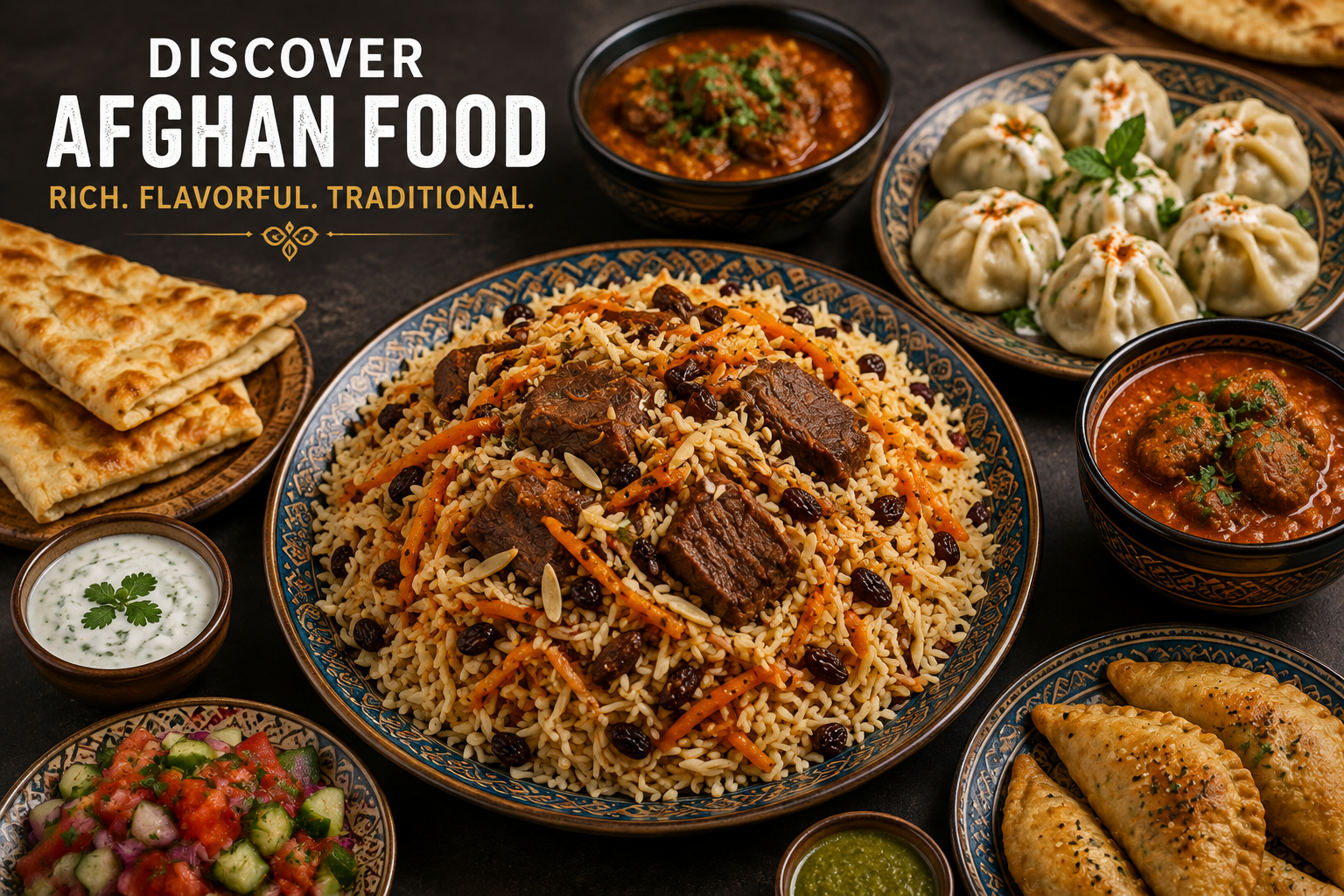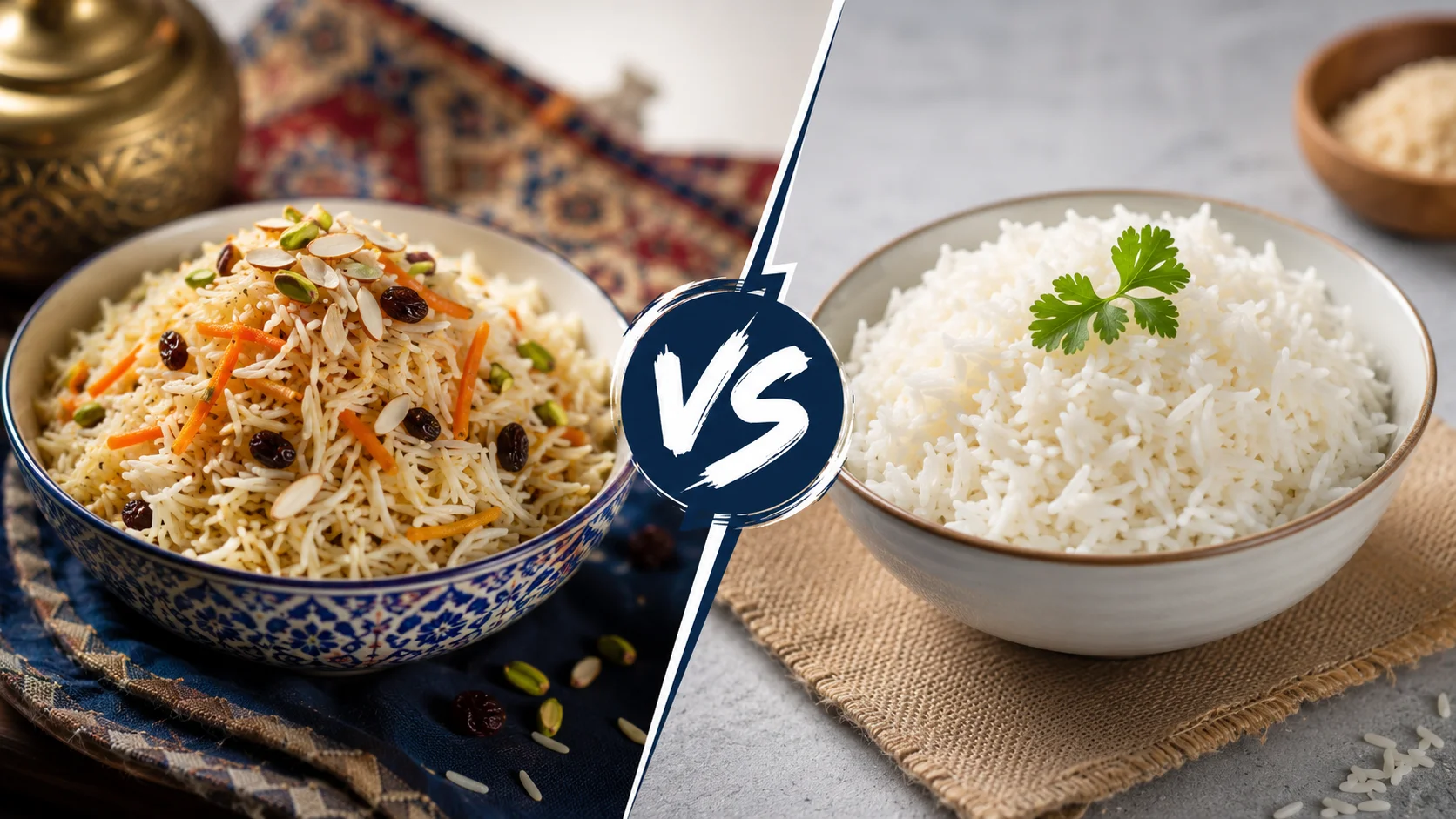
There is something almost magical about sitting down to a plate of Afghan rice. The aroma hits you first, warm and spiced, carrying the scent of saffron, cardamom, and slow-cooked meat. Then comes the color, golden and rich, topped with caramelized carrots, plump raisins, and slivered nuts. Before you even take a bite, you already know this is not ordinary rice.
Afghan rice dishes have a reputation that travels far beyond the borders of Afghanistan. People who have tasted them once rarely forget the experience. And those who have grown up eating them consider no other rice meal truly complete. But what exactly makes Afghan rice so different? Why do Afghan rice dishes consistently outshine regular rice meals in flavor, depth, and satisfaction?
The answer lies in centuries of history, a land positioned at the heart of the ancient Silk Road, a rich spice tradition, and cooking techniques passed down through generations with great care and love.
A Land Built for Flavor: The Geography Behind Afghan Rice
Afghanistan sits at the crossroads of the world. Bordering Iran, Uzbekistan, Tajikistan, Turkmenistan, Pakistan, and China, the country has long served as a meeting point for traders, travelers, and cultures. This geography did not just shape Afghanistan’s history. It shaped its food.
The Silk Road passed directly through Afghanistan, and with it came spices, ingredients, and culinary ideas from the Arab world, Persia, Central Asia, the Indian subcontinent, and the Far East. Over centuries, Afghan cooks absorbed the best of all these traditions and blended them with their own native ingredients to create something entirely unique.
This is the foundation of authentic Afghan rice recipes. They do not come from a single source. They are the product of a thousand years of cultural exchange, refined by countless home cooks who knew that rice was not just food. It was an expression of hospitality, love, and heritage.
Afghan Rice vs Regular Rice: What Makes the Difference?
When most people think of regular rice meals, they picture plain steamed or boiled rice served as a simple side dish. White rice cooked in water, perhaps with a little salt. It is filling, yes. But it is not memorable.
Afghan rice vs regular rice is not even a close comparison, and here is why:
Layered Flavor from the Very First Step
In Afghan cooking, the process begins long before the rice enters the pot. Onions are slowly caramelized until deep golden brown. Meat is braised in its own juices with whole spices. Broth is built with turmeric, cumin, coriander, and cinnamon. The rice does not just cook in water. It absorbs all of this, grain by grain, until every bite is saturated with flavor.
The Right Rice for the Right Result
Afghan cuisine uses long-grain basmati rice, a variety known for its fragrant aroma and fluffy texture when cooked correctly. Regular rice meals often use short-grain or medium-grain rice that clumps and becomes starchy. Basmati separates beautifully when prepared using proper Afghan rice cooking techniques, giving you light, distinct grains that carry flavor without becoming heavy.
A Balance of Sweet, Savory, and Spiced
One of the most striking things about flavorful Afghan rice dishes is how they balance contrasting tastes. Sweet raisins sit alongside savory meat. Caramelized carrots add natural sweetness to a spiced rice base. This balance is intentional and deeply cultural. Afghan cooks have mastered the art of combining opposite flavors into something harmonious and deeply satisfying.
The Spices That Change Everything
If there is one thing that explains why Afghan rice tastes better, it is the spices. Afghan cuisine has access to some of the finest spices in the world, and several are native to Afghanistan itself.
Saffron has been cultivated in the fields of Herat for centuries. It gives Afghan rice a warm golden hue and a floral, slightly honey-like depth that no other ingredient can replicate. Green cumin, known locally as siah jeera, grows in the mountain province of Badakhshan and has a more complex, earthier flavor than the regular cumin found in most kitchens.
Beyond these native spices, Afghan spiced rice dishes also use:
- Cardamom, for a sweet and floral warmth
- Turmeric, for color and earthy depth
- Cinnamon, for a subtle sweetness that ties everything together
- Coriander, for brightness and aroma
- Black pepper, for a gentle background heat
These spices are not dumped in all at once. They are layered, added at the right moments, bloomed in fat, infused in broth, and allowed to develop slowly. This patience and precision is what separates Afghan cuisine rice recipes from a standard pot of rice with seasoning thrown in at the end.
Kabuli Pulao: The Crown Jewel of Afghan Rice Dishes
No discussion of traditional Afghan rice dishes is complete without talking about Kabuli Pulao, Afghanistan’s national dish and perhaps the most celebrated rice preparation in the entire region.
Kabuli Pulao translates to “excellent rice” in Dari, and the name is well-earned. This dish is made with long-grain basmati rice slowly cooked and steamed in a spiced meat broth until each grain is infused with deep, savory flavor. Tender lamb pieces are braised separately, allowing the fat and juices to enrich the cooking liquid. Carrots are cut into thin strips and caramelized until soft and sweet. Raisins are fried gently until they puff up and become jewel-like. Pistachios and almonds are slivered and toasted, then scattered over the top.
The result is a dish that looks like a celebration and tastes like one. It is served at weddings, family gatherings, and important occasions across Afghanistan. When you taste Kabuli Pulao, you understand why Afghan rice has earned its reputation.
The Afghan pilaf recipe for Kabuli Pulao requires patience and skill. The rice must be parboiled, then layered over the meat and broth, then sealed tightly so it steams from the bottom up. Getting the timing right, knowing when the rice has absorbed just enough liquid, knowing when the bottom layer has formed a golden crust without burning, this is knowledge passed from mother to daughter, from grandmother to grandchild, over decades.
Restaurants like Afghan Kabob & Donair bring this same tradition to their communities, offering guests a genuine taste of Kabuli Pulao made with the care and technique it deserves, connecting diners to a culinary heritage that is centuries old.
How Afghan Rice Is Made: The Techniques Behind the Taste
Understanding how Afghan rice is made helps explain why the end result is so different from anything else. Afghan rice cooking techniques are not complicated, but they require attention, care, and a respect for the process.
Blooming Spices in Fat
The first step in almost every Afghan rice dish is frying onions in oil until they are deeply golden. This takes time, usually 20 to 30 minutes over medium heat. These caramelized onions become the flavor base for everything else. Whole spices are often added to the hot oil before anything else, blooming them in fat to release their essential oils and maximize their impact.
Building the Broth
Meat is added next and browned on all sides before water or stock is added. The resulting broth is rich, complex, and deeply seasoned. This is the liquid that will cook the rice. It is not water. It is flavor.
Parboiling and Steaming
Afghan rice is typically parboiled separately until just barely tender, then drained and layered over the meat and broth. The pot is then sealed tightly, often with a kitchen towel wrapped around the lid to trap steam. The rice finishes cooking in this sealed environment, absorbing the spiced broth from below while steaming from the trapped moisture above. The result is rice that is fluffy, separate, and deeply flavorful all the way through.
The Golden Crust
Perhaps the most prized element of any best Afghan rice meal is the tahdig, the crispy layer of golden rice that forms at the bottom of the pot. This crust, caramelized and slightly crunchy, is considered a delicacy. Guests compete for it. Children ask for it first. It is proof that the cook has done everything right.
A World of Afghan Rice Beyond Kabuli Pulao
While Kabuli Pulao is the most famous, Afghan cuisine rice recipes offer a remarkable variety that most people have never explored.
Zamarod Pulao is emerald green rice prepared with fresh spinach and herbs including parsley, dill, cilantro, and fenugreek, cooked slowly in a beef stock until the rice takes on the color of precious gemstones. It is traditionally served during Nowruz, the Afghan New Year.
Narenj Pulao features rice cooked with the candied peels of seville oranges, cardamom, saffron, and lamb. The citrus peels are sun-dried, blanched to remove bitterness, and then sweetened in syrup before being folded into the rice. It is a dish prepared for the most special of occasions.
Zereshk Pulao combines rice with wild tart barberries caramelized in sugar syrup, saffron, butter, and fork-tender chicken. The result is a sweet-sour richness that is deeply satisfying.
Mash Pulao features mung beans cooked with rice, sautéed onions, garlic, ginger, tomatoes, and a masala blend of spices. It is comfort food at its finest, served with yogurt and fresh cilantro chutney.
Each of these dishes represents a different region, a different season, a different occasion. Together they form a tapestry of Afghan rice cooking that is one of the most diverse and refined rice traditions in the world.
The Cultural Weight of Afghan Rice
Food is never just food in Afghan culture. Rice is the soul of the Afghan table. It is what you cook when guests arrive unexpectedly. It is what fills the wedding dastarkhwan, the traditional spread laid out on the floor for large gatherings. It is what a mother prepares when her children are sick and need comfort.
The knowledge of how to make Afghan rice properly is treated as something sacred. Grandmothers teach their daughters. Daughters teach their own children. The recipes change subtly with each generation, a little more saffron here, a slightly different timing there, but the heart of the dish remains the same.
This cultural weight is something that a bowl of plain rice simply cannot carry. When you eat Afghan rice, you are eating history, tradition, and love. That is something no amount of butter or salt added to regular rice can recreate.
Conclusion: Afghan Rice Dishes Stand in a Class of Their Own
The reason Afghan rice dishes taste better than regular rice meals is not a mystery. It is the result of geography, history, technique, and generations of passion for good food. It is saffron cultivated in Herat for a thousand years. It is the patience of a cook who spends an hour caramelizing onions before the rice even touches the pot. It is the knowledge of how to balance sweet raisins against savory meat, how to steam rice to perfection without lifting the lid, how to create a golden crust that everyone at the table will want a piece of.
Afghan rice dishes are a masterclass in flavor. Whether you are tasting Kabuli Pulao for the first time or enjoying a plate of Zamarod Pulao at a family gathering, you are experiencing something that regular rice simply cannot offer. Try authentic Afghan rice recipes at least once, and you will understand immediately why they have won the hearts and stomachs of people across the world.