
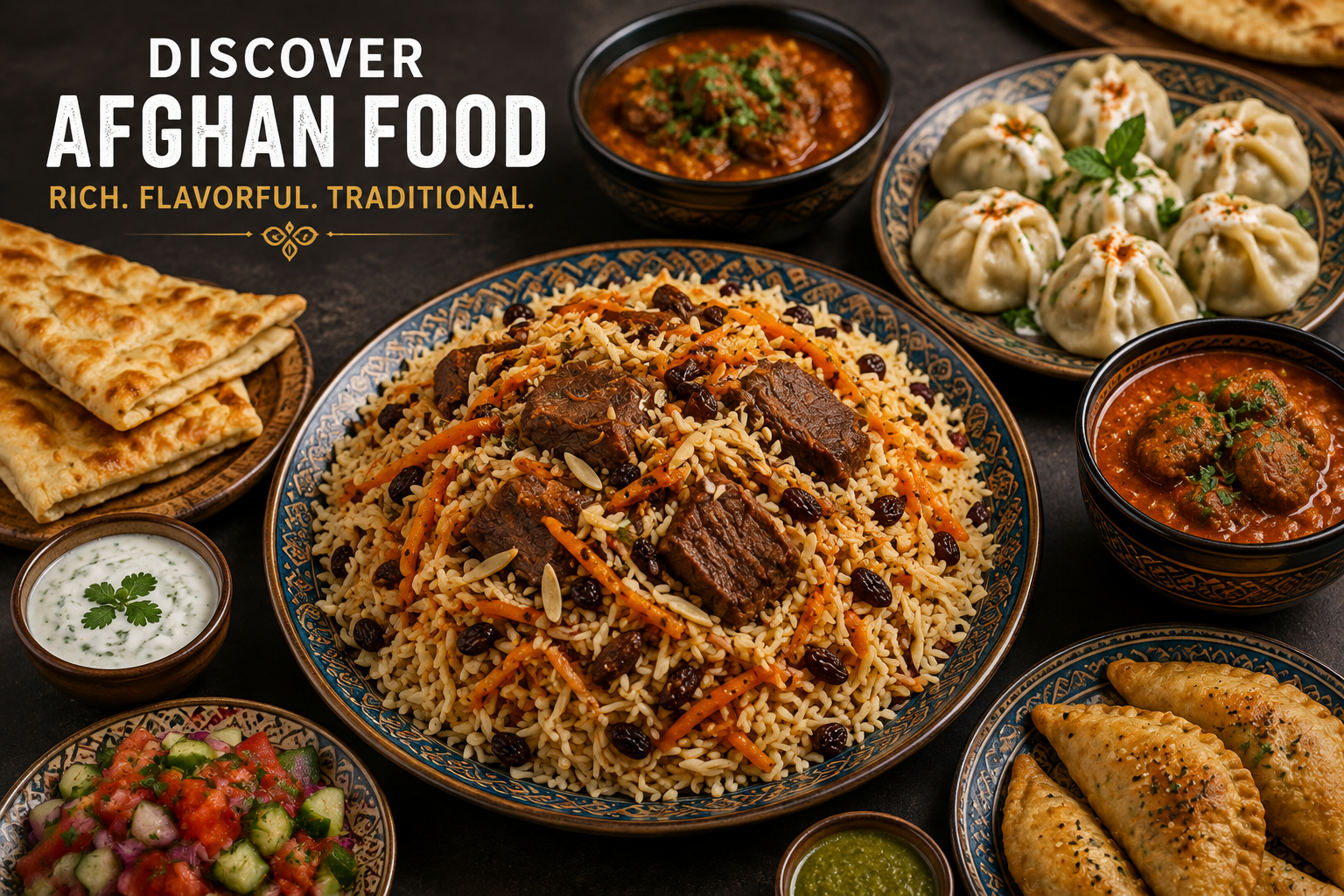
If you have never tried Afghan food before, you are in for a treat. Afghan food is warm, hearty, and full of comforting flavors that come from centuries of history, trade, and tradition. Sitting at the crossroads of Central Asia, South Asia, and the Middle East, Afghanistan has developed a cuisine that borrows influences from all of its neighbors while still holding on to something distinctly its own.
In this guide, we will explain what Afghan cuisine is all about, look at the ingredients and flavors that define it, and walk through 10 traditional Afghan dishes you should try at least once. Whether you are new to Afghan food or already a fan looking to try something new, this list will help you understand what makes this cuisine so special, and where you can go to taste it for yourself, including Afghan Kabob & Donair in Saskatoon.
What Is Afghan Food?
Afghan food is the traditional cuisine of Afghanistan, shaped by the country’s location along the historic Silk Road. Because Afghanistan sits between Iran, Pakistan, Uzbekistan, Tajikistan, and China, its food reflects a blend of Persian, Central Asian, and South Asian cooking styles, while still keeping its own identity.
At its core, Afghan cuisine focuses on slow-cooked meats, fragrant rice dishes, fresh herbs, and simple but well-balanced spice blends. Unlike some neighboring cuisines that lean heavily on heat and chili, Afghan dishes tend to be mild to medium in spice level, with an emphasis on warmth from spices like cumin, coriander, and cardamom rather than pure heat. This makes Afghan food approachable for people who enjoy flavorful meals without an overwhelming amount of spice.
Hospitality is also a huge part of Afghan food culture. Meals are often shared family-style, with big platters of rice, bread, and meat placed at the center of the table for everyone to enjoy together. Food is closely tied to generosity and community in Afghan households, which is part of why the dining experience feels so welcoming.
What Makes Afghan Cuisine Unique?
A few things set traditional Afghan food apart from other regional cuisines:
- Rice is central to the meal. Long-grain basmati rice, often cooked with dried fruits, carrots, or lentils, is a staple in many Afghan dishes.
- Meat is slow-cooked for tenderness. Lamb, beef, and chicken are common, usually simmered for hours in flavorful sauces or grilled over open flame.
- Fresh herbs and mild spices dominate. Coriander, mint, dill, and parsley are used generously, alongside warming spices rather than intense heat.
- Bread is essential. Naan is served with almost every meal and is often used to scoop up food instead of utensils.
- Balance over heat. Afghan dishes aim for a balance of savory, slightly sweet, and tangy notes rather than spicy intensity.
These elements combine to create Afghan dishes that feel hearty, comforting, and layered in flavor without being overpowering.
10 Traditional Afghan Dishes You Should Try
Here are 10 popular Afghan dishes that represent the heart of Afghan cuisine.
1. Kabuli Pulao
Kabuli pulao is widely considered the national dish of Afghanistan. It is a fragrant rice dish made with tender lamb or beef, basmati rice, caramelized carrots, and raisins, often topped with slivered almonds or pistachios.
The rice is cooked in the meat’s broth, which gives it a deep, savory flavor, while the carrots and raisins add a subtle sweetness that balances the dish beautifully. Kabuli pulao is popular because it captures everything great about Afghan cooking in one plate: slow-cooked meat, perfectly spiced rice, and a mix of savory and sweet flavors that feels both simple and special.
2. Afghan Kabob
Afghan kabob refers to skewered and grilled meat, usually beef, lamb, or chicken, marinated in a blend of garlic, yogurt, and mild spices before being cooked over an open flame. The result is smoky, juicy, and tender meat with a slightly charred exterior.
Afghan kabob is one of the most popular Afghan dishes both in Afghanistan and among Afghan restaurants abroad, largely because of how simple and satisfying it is. It is often served with rice, naan, and grilled tomatoes, making it a filling and flavorful meal that is easy for newcomers to enjoy.
3. Mantu
Mantu are small steamed dumplings filled with seasoned ground beef or lamb and onions. They are typically topped with a garlicky yogurt sauce and a tomato-based meat sauce, then finished with dried mint.
The combination of soft dumpling wrapper, savory filling, and creamy yogurt topping makes mantu a favorite comfort food in Afghan households. It is often served at gatherings and celebrations, and it is a great dish for people who enjoy dumplings from other cuisines but want to try something a little different.
4. Ashak
Ashak is another type of Afghan dumpling, this one filled with scallions or leeks instead of meat. Like mantu, ashak is topped with yogurt and a meat sauce, usually made with ground beef.
Ashak has a lighter, more vegetable-forward flavor compared to mantu, and it is often considered a specialty dish reserved for special occasions. The contrast between the mild dumpling filling and the rich toppings is what makes ashak so beloved among traditional Afghan dishes.
5. Bolani
Bolani is a stuffed flatbread, similar to a savory stuffed pancake, filled with ingredients like potatoes, spinach, pumpkin, or lentils. The dough is rolled thin, stuffed, and then pan-fried until crispy and golden.
Bolani is usually served with yogurt or a mint chutney on the side for dipping. It is a popular snack or appetizer because it is flavorful, portable, and satisfying, making it a great introduction to Afghan food for people trying it for the first time.
6. Qorma
Qorma is a category of Afghan stews, usually made with meat, vegetables, and a rich, spiced sauce. Common versions include qorma with spinach, potatoes, or okra, simmered with onions, tomatoes, and warming spices until thick and flavorful.
Qorma is typically served over rice and is considered a everyday comfort food in Afghan homes. Its popularity comes from how versatile it is. Almost any vegetable can be turned into a qorma, making it a staple that varies from household to household.
7. Aushak-e-Kaddu (Pumpkin Dish)
Kaddu, or Afghan pumpkin, is a sweet and savory dish made by slow-cooking pumpkin with sugar, garlic, and mild spices until soft and caramelized. It is usually topped with a garlicky yogurt sauce and sometimes a bit of ground meat sauce.
This dish is a great example of how Afghan cuisine balances sweet and savory flavors in a single dish. It is especially popular in the fall and winter months and is a comforting option for those who enjoy warm, mildly sweet flavors.
8. Chapli Kabob
Chapli kabob is a flat, spiced meat patty, usually made from ground beef or lamb mixed with onions, tomatoes, coriander, and pomegranate seeds for a slightly tangy flavor. It is pan-fried until crispy on the outside and juicy inside.
Chapli kabob is popular as street food and is often served in naan as a sandwich. Its crispy texture and bold, herby flavor make it a standout among Afghan kabob varieties.
9. Afghan Naan
While not a main dish on its own, Afghan naan deserves a spot on this list because it accompanies nearly every meal. This bread is long, oval-shaped, and slightly chewy, often baked in a clay oven called a tandoor.
Naan is used to scoop up stews, wrap kabobs, or simply enjoyed on its own. Its simplicity and versatility make it an essential part of the Afghan dining experience.
10. Firni
Firni is a traditional Afghan dessert made from milk, rice flour or cornstarch, sugar, and flavored with cardamom and rosewater. It has a smooth, pudding-like texture and is often garnished with crushed pistachios.
Firni is popular as a light, fragrant way to end an Afghan meal. Its delicate sweetness and floral aroma make it a refreshing contrast to the heartier, savory dishes that typically make up the rest of the meal.
Common Ingredients and Flavors in Afghan Cuisine
Understanding the building blocks of traditional Afghan food makes it easier to appreciate each dish. Some of the most common ingredients include:
- Rice: Basmati rice is used in pulao and other rice-based dishes.
- Meat: Lamb and beef are the most traditional choices, though chicken is common too.
- Yogurt: Used as a topping, marinade, and cooling element alongside richer dishes.
- Fresh herbs: Coriander, mint, and dill appear throughout Afghan cooking.
- Warming spices: Cumin, coriander seed, cardamom, and black pepper are used for depth rather than heat.
- Dried fruits and nuts: Raisins, apricots, almonds, and pistachios add texture and subtle sweetness to savory dishes.
- Tomatoes and onions: These form the base of many sauces and stews.
Together, these ingredients create the signature Afghan flavor profile: savory, mildly spiced, and often touched with a hint of natural sweetness.
Afghan Food vs. Other Central and South Asian Cuisines
Because Afghanistan borders several countries with well-known cuisines, people often wonder how Afghan food differs from Indian, Pakistani, or Persian food.
Compared to Indian and Pakistani cuisine, Afghan food is generally milder and relies less on chili heat, favoring warming spices instead of intense spice levels. Compared to Persian cuisine, Afghan food shares some similarities, like the use of rice and dried fruit, but tends to use heartier, more rustic preparations, especially with dumplings like mantu and ashak, which are more closely tied to Central Asian traditions.
This blend of influences, combined with its own techniques and flavor balance, is what makes Afghan cuisine a distinct culinary tradition rather than simply a mix of its neighbors.
What Should Beginners Order When Trying Afghan Food for the First Time?
If you are new to Afghan food, here is a simple approach to ordering:
- Start with an appetizer like bolani. It is mild, crispy, and easy to enjoy.
- Choose a kabob as your main. Afghan kabob or chapli kabob are approachable, flavorful, and familiar enough for first-timers.
- Add a side of Kabuli pulao. This lets you experience the signature rice dish that defines Afghan cuisine.
- Try mantu or ashak if you enjoy dumplings. They offer a different texture and flavor experience.
- Finish with firni. A light, fragrant dessert is a great way to end the meal.
This combination gives you a well-rounded introduction to popular Afghan dishes without being overwhelming.
Where to Try Authentic Afghan Food
If you are in Saskatchewan and want to experience traditional Afghan food for yourself, Afghan Kabob & Donair in Saskatoon offers a menu built around many of the dishes mentioned above, including flavorful kabobs and comforting rice dishes. It is a great starting point for anyone curious about Afghan cuisine and looking to try it in a welcoming, casual setting. You can also check out their menu page to see current offerings before you visit.
Frequently Asked Questions
Is Afghan food spicy? Afghan food is generally mild to medium in spice level. It relies more on warming spices like cumin and coriander than on chili heat, which makes it approachable for people who are sensitive to spicy food.
What is the national dish of Afghanistan? Kabuli pulao is widely recognized as the national dish of Afghanistan. It features rice, meat, carrots, and raisins, and it is commonly served at celebrations and family gatherings.
What is the difference between mantu and ashak? Mantu are dumplings filled with seasoned meat, while ashak are filled with scallions or leeks and are typically vegetarian on the inside, though both are topped with yogurt and meat sauce.
Is Afghan food similar to Indian food? Afghan food shares some ingredients with Indian food, like rice and certain spices, but it is generally milder and places more emphasis on slow-cooked meats and rice dishes rather than heavily spiced curries.
What should I try first if I have never had Afghan cuisine? A good starting point is an Afghan kabob served with rice and naan, since it offers a familiar format with distinctly Afghan flavors that are easy to enjoy.
Final Thoughts
Afghan food offers a comforting, flavorful introduction to a cuisine shaped by centuries of history and tradition. From the fragrant layers of Kabuli pulao to the smoky char of Afghan kabob and the delicate dumplings in mantu and ashak, traditional Afghan dishes offer something for nearly every type of food lover.
If this list has made you curious to try Afghan cuisine for yourself, consider visiting Afghan Kabob & Donair in Saskatoon to taste these dishes firsthand. It is a simple, delicious way to explore a cuisine that truly deserves more recognition.


